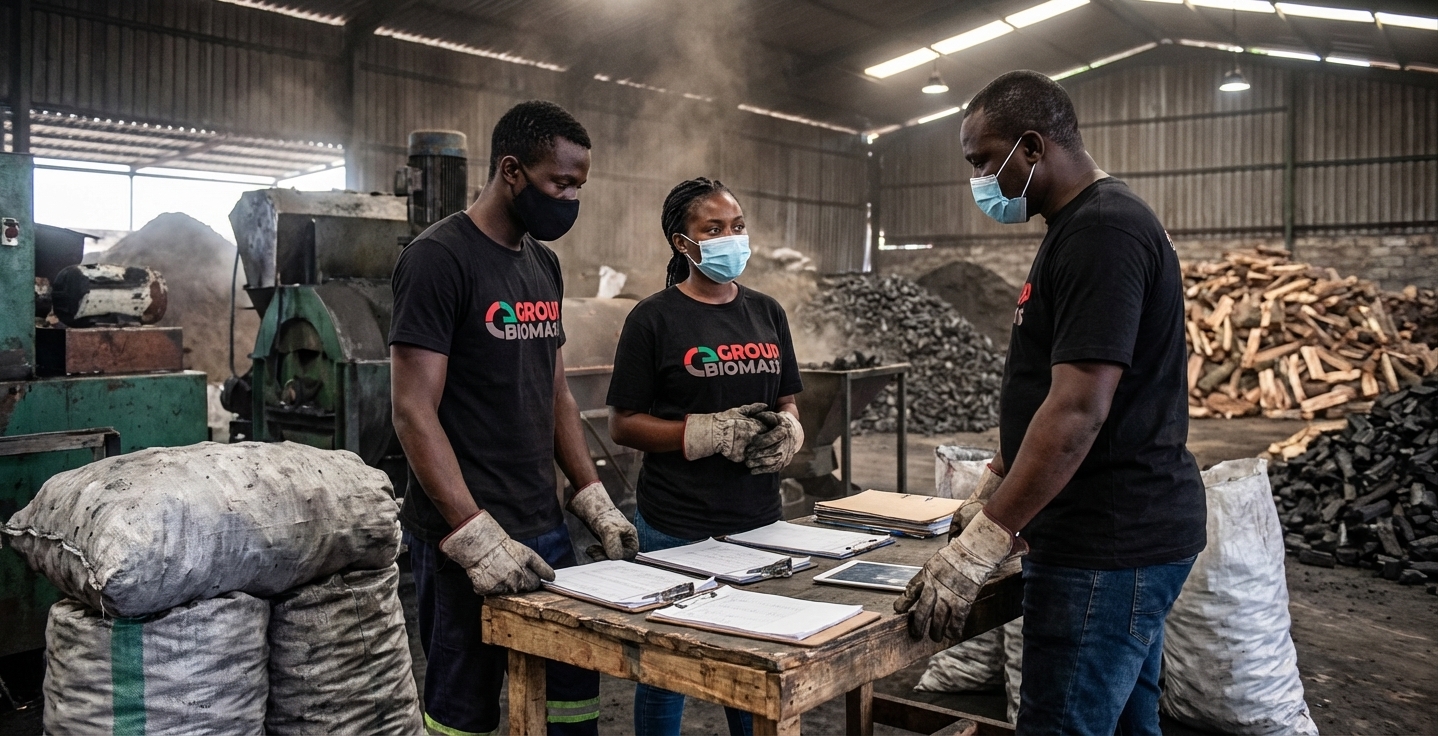
Deep within Cameroon , a substantial operation stands as a representation to the increasing demand for charcoal . This industrial complex, reportedly the region’s biggest fuel plant , is drawing attention for both its scale and the evident environmental impact . While creating more info livelihoods for local communities, the factory's processes are sparking concerns about ethical forest harvesting and the future preservation of the nation's woodlands .
Hardwood Lump Charcoal Export Boom: Cameroon’s Promising Player
Cameroon is experiencing a substantial surge in dense lump carbon sales, positioning itself as a major source in the global industry. Fueled by increasing demand from European US and Asian regions, the nation’s supply of this eco-friendly fuel is quickly expanding, offering promising prospects for regional populations and supporting the regional financial situation. The priority on responsibly harvested wood lump charcoal is demonstrating to be a critical element in securing global buyers.
Inside Cameroon’s Hardwood Lump Charcoal Factory: Production & Sustainability
Stepping into a average Cameroon hardwood lump carbon factory uncovers a surprisingly straightforward method of manufacturing. Green hardwood, often sourced from managed woodlands, are thoroughly felled and transported to a kiln. Here, the lumber is gradually heated with minimal oxygen, a procedure that transforms it into granular charcoal. Although the traditional methods employed can be demanding, more contemporary factories are incorporating improved techniques and seeking ways to enhance the productivity and nature responsibility. This includes dedicating in renewable resources and implementing strict waste control .
Cameroon's Lump Charcoal Sector : A Significant Role in Global Shipments
Despite mounting environmental anxieties, Cameroon’s lump charcoal sector remains a surprising but vital role in the global sales market . The creation of charcoal from wood is a critical origin of income for many of Cameroonian communities, particularly in remote zones. This activity generates a substantial amount of charcoal shipped for overseas destinations , often fueling heating needs in other regions, though this reliance creates problems relating to forest loss and eco-friendly woodland protection.
La Face à Charbon de Bois Lump de Bois vs. Les Briquettes: Une Perspective Camerounaise
En le Cameroun , le choix entre un charbon de bois lump et des briquettes interroge une interrogation . Traditionnellement, , le charbon de bois est privilégié pour son saveur typique et son aptitude à donner une chaleur intense , parfaite afin de les cuissons traditionnelles . Cependant, , les briquettes , plus disponibles à obtenir et plus chères , gagnent en attention, particulièrement auprès les régions urbaines .
Eco-friendly Charcoal Production : The Future of Cameroon’s Timber Industry
The traditional method of charcoal creation in Cameroon presents a serious challenge to its valuable hardwood forests . However, new sustainable techniques offer a viable path forward. These encompass technologies like wood waste conversion and improved earth systems, which minimize deforestation, cut emissions, and create livelihood opportunities for local communities . Embracing these eco-friendly solutions is critical to preserving Cameroon's biological heritage and guaranteeing the long-term viability of its hardwood sector while tackling climate change .